
Archives: News

[Webinar] Ensuring quality and authenticity in mushroom supplements using HPTLC

On-demand webinar
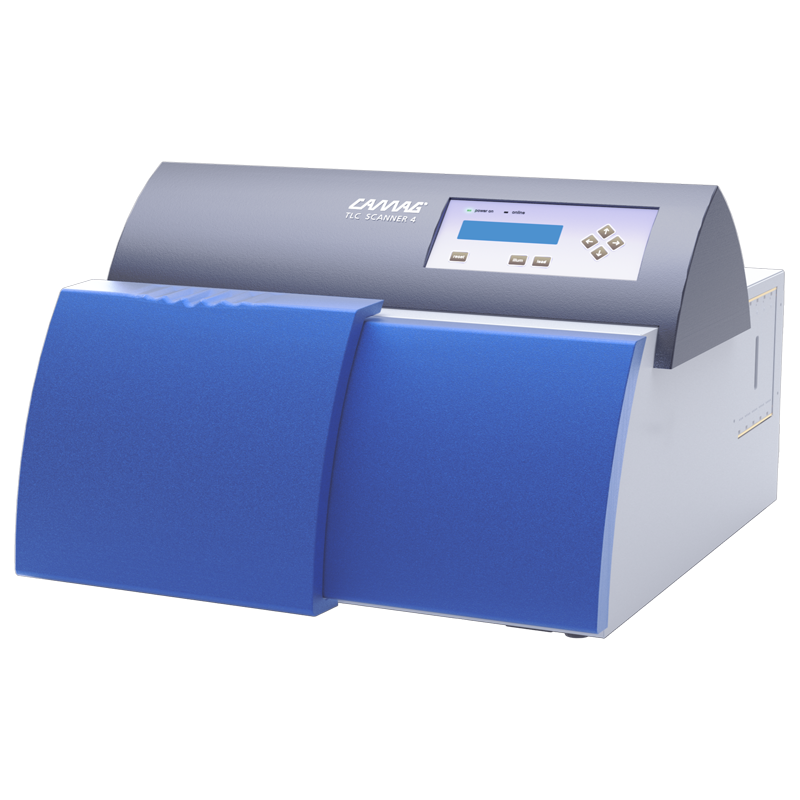
The functional mushroom extract market is experiencing rapid growth, yet the quality and authenticity of many products remain questionable due to a lack of validated identification methods. Join Dr. Melanie Broszat, Editor of the CBS Journal and Coleton Windsor, Analytical Chemist at Nammex, a leader in mushroom extract production and quality testing, as they introduce a fit-for-purpose, validated HPTLC method. This new method enhances quality control transparency and reliability by addressing industry concerns over mislabeling and product efficacy, setting new standards for quality testing in mushroom extract markets. Find out how this cutting-edge technique was specifically designed for the accurate identification of multiple fungi species.   TLC Scanner 4 Hero
Key learning objectives:
  • Understand the significance of accurate species identification in the mushroom extract food and dietary supplement industries
  • Learn how the HPTLC method enhances quality control by differentiating between authentic mushroom and myceliated grain products
  • Gain insights into composition and quality differences between commercially available fungi products, as well as the challenges associated with mislabeling
Who should attend?
  • Quality control professionals in the dietary supplement and functional food industries.
  • Product developers and manufacturers of mushroom-based supplements.
  • Regulatory and compliance specialists focused on product authenticity and labeling.
  • Researchers and scientists interested in mushroom identification and analysis.
  • Industry stakeholders seeking to improve transparency and trust in mushroom products.
Speakers
Dr. Melanie Broszat Professor of Analytical Chemistry at Offenburg University of Applied Sciences Editor of the CBS Journal Coleton Windsor BSc Analytical Chemist Nammex

[Webinar] Ensuring quality and authenticity in mushroom supplements using HPTLC

On-demand webinar

The functional mushroom extract market is experiencing rapid growth, yet the quality and authenticity of many products remain questionable due to a lack of validated identification methods.

Join Dr. Melanie Broszat, Editor of the CBS Journal and Coleton Windsor, Analytical Chemist at Nammex, a leader in mushroom extract production and quality testing, as they introduce a fit-for-purpose, validated HPTLC method. This new method enhances quality control transparency and reliability by addressing industry concerns over mislabeling and product efficacy, setting new standards for quality testing in mushroom extract markets. Find out how this cutting-edge technique was specifically designed for the accurate identification of multiple fungi species.
Key learning objectives:
  • Understand the significance of accurate species identification in the mushroom extract food and dietary supplement industries
  • Learn how the HPTLC method enhances quality control by differentiating between authentic mushroom and myceliated grain products
  • Gain insights into composition and quality differences between commercially available fungi products, as well as the challenges associated with mislabeling
Who should attend?
  • Quality control professionals in the dietary supplement and functional food industries.
  • Product developers and manufacturers of mushroom-based supplements.
  • Regulatory and compliance specialists focused on product authenticity and labeling.
  • Researchers and scientists interested in mushroom identification and analysis.
  • Industry stakeholders seeking to improve transparency and trust in mushroom products.
Speakers

Dr. Melanie Broszat
Professor of Analytical Chemistry at Offenburg University of Applied Sciences
Editor of the CBS Journal

Coleton Windsor BSc
Analytical Chemist
Nammex

Release of the CBS 133

Welcome to another exciting issue of the CBS Journal as we continue our mission to present important research and advances in the world of HPTLC. This issue brings together several compelling applications from experts around the world that demonstrate the versatility and power of HPTLC in addressing modern analytical challenges. Our first article delves into the burgeoning world of functional fungi. The team at Nammex is using an innovative HPTLC method to distinguish high-quality mushroom extracts from inferior products on the market. Their research provides a critical tool for improving product authentication in this rapidly growing sector. Next, we present an insightful article on the development of HPTLC methods for pharmacopoeia monographs. The CAMAG laboratory has long helped to set global standards for the identification of botanical and herbal drugs, and this work continues to shape the quality control of pharmacopoeias worldwide. In this CBS issue, we also address a key concern in food safety: oil adulteration. The Nestlé research team in Lausanne demonstrates the ability of HPTLC to detect adulteration in edible oils. This method provides a rapid and reliable solution for ensuring authenticity in global food supply chains, underscoring the importance of the technique in both industrial and regulatory contexts. In the pharmaceutical field, our fourth article focuses on Indian propolis and its bioactive constituents. Researchers from the Poona College of Pharmacy have used HPTLC to determine key neuroprotective compounds in propolis, highlighting the utility of the method in evaluating natural products for therapeutic purposes. Enjoy reading!

Release of the CBS 133

Welcome to another exciting issue of the CBS Journal as we continue our mission to present important research and advances in the world of HPTLC. This issue brings together several compelling applications from experts around the world that demonstrate the versatility and power of HPTLC in addressing modern analytical challenges.

Our first article delves into the burgeoning world of functional fungi. The team at Nammex is using an innovative HPTLC method to distinguish high-quality mushroom extracts from inferior products on the market. Their research provides a critical tool for improving product authentication in this rapidly growing sector.

Next, we present an insightful article on the development of HPTLC methods for pharmacopoeia monographs. The CAMAG laboratory has long helped to set global standards for the identification of botanical and herbal drugs, and this work continues to shape the quality control of pharmacopoeias worldwide.

In this CBS issue, we also address a key concern in food safety: oil adulteration. The Nestlé research team in Lausanne demonstrates the ability of HPTLC to detect adulteration in edible oils. This method provides a rapid and reliable solution for ensuring authenticity in global food supply chains, underscoring the importance of the technique in both industrial and regulatory contexts.

In the pharmaceutical field, our fourth article focuses on Indian propolis and its bioactive constituents. Researchers from the Poona College of Pharmacy have used HPTLC to determine key neuroprotective compounds in propolis, highlighting the utility of the method in evaluating natural products for therapeutic purposes.

Enjoy reading!

[Webinar] Development of an HPTLC method for evaluating vegetable oil adulteration

Tuesday, 24 September 2024 10:00 EDT / 15:00 BST / 16:00 CEST
Join this webinar to discover how HPTLC can enhance the reliability and efficiency of your edible oil quality assessments. Dr. Tiên Do, Chief Scientific Officer at CAMAG, and Paul Rogeboz, Junior Research Assistant at Nestlé Research will discuss how a newly developed HPTLC method was developed to identify edible oils. Find out how it was used to detect adulteration with remarkable accuracy. Our experts will also explore the statistical validation of the method, its robust performance in interlaboratory studies, and its ability to identify adulteration levels from 5% to 25%.
Key topics discussed in this webinar will include:
  • Understanding HPTLC for oil authenticity: Gain insights into the principles and applications of high-performance thin-layer chromatography (HPTLC) in ensuring edible oil authenticity
  • Method development and validation: Learn about the development of the untargeted fingerprint profiling method for detecting vegetable oil adulteration and the statistical validation processes for variability, detection limits, and reproducibility
  • Real-world application and robustness: Discover the robustness of the HPTLC method through interlaboratory studies and understand its practical applications in the food industry
  • Detection capabilities: Explore the method’s ability to accurately detect adulteration levels ranging from 5% to 25%
Who should attend?
  • Quality control professionals
  • Food industry researchers
  • Regulatory affairs specialists
  • R&D teams
  • Food manufacturers
  • Lab technicians
Speakers
Dr. Tiên Do Chief Scientific Officer CAMAG Paul Rogeboz MSc Junior Research Assistant Nestlé Research

[Webinar] Development of an HPTLC method for evaluating vegetable oil adulteration

Tuesday, 24 September 2024 10:00 EDT / 15:00 BST / 16:00 CEST

Join this webinar to discover how HPTLC can enhance the reliability and efficiency of your edible oil quality assessments.

Dr. Tiên Do, Chief Scientific Officer at CAMAG, and Paul Rogeboz, Junior Research Assistant at Nestlé Research will discuss how a newly developed HPTLC method was developed to identify edible oils. Find out how it was used to detect adulteration with remarkable accuracy.

Our experts will also explore the statistical validation of the method, its robust performance in interlaboratory studies, and its ability to identify adulteration levels from 5% to 25%.

Key topics discussed in this webinar will include:
  • Understanding HPTLC for oil authenticity: Gain insights into the principles and applications of high-performance thin-layer chromatography (HPTLC) in ensuring edible oil authenticity
  • Method development and validation: Learn about the development of the untargeted fingerprint profiling method for detecting vegetable oil adulteration and the statistical validation processes for variability, detection limits, and reproducibility
  • Real-world application and robustness: Discover the robustness of the HPTLC method through interlaboratory studies and understand its practical applications in the food industry
  • Detection capabilities: Explore the method’s ability to accurately detect adulteration levels ranging from 5% to 25%
Who should attend?
  • Quality control professionals
  • Food industry researchers
  • Regulatory affairs specialists
  • R&D teams
  • Food manufacturers
  • Lab technicians
Speakers

Dr. Tiên Do
Chief Scientific Officer
CAMAG

Paul Rogeboz MSc
Junior Research Assistant
Nestlé Research

[Webinar] Unlocking Forensic Mysteries: Advanced HPTLC Techniques for Explosives and Chemical Warfare

On-demand
Join us as our expert speakers explore the use of High-Performance Thin-Layer Chromatography (HPTLC) in forensic science and provide an in-depth insight into cutting-edge techniques for the analysis and identification of explosives and chemical warfare agents.
Who should attend
This webinar is tailored for professionals seeking to elevate their expertise in forensic analysis and improve the effectiveness of their investigations.
Key learning objectives
  • Understand the critical role of HPTLC in forensic science
  • Learn pragmatic approaches to forensic analysis using HPTLC
  • Explore the development of HPTLC methods for detecting chemical warfare agents and explosives
Speakers

Dr. Tiên Do
Chief Scientific Officer
CAMAG

Raphael Vizzini
Area Sales Director EMEA & CIS
CAMAG

Release of the CBS 132

Welcome to the latest issue of the CBS Journal.

We are pleased to present you with a variety of articles highlighting advances in the field of HPTLC.

First, we delve into the critical area of chemical warfare agent detection. Through the lens of HPTLC, we learn about a powerful screening method to identify nerve agents, blistering agents and irritants, as well as arsenic agents. This work is presented by the Swiss Army and experts from CAMAG.

Our focus then shifts to the quality assessment of saffron, a valuable commodity in both medicine and food. This successful work is presented by the Anchrom laboratory in India.

We then discover the implementation of Design of Experiments (DoE) software in method evaluation using a compendial method. This approach, demonstrated by the company Wala and the Esslingen University of Applied Sciences in Germany, aims to streamline robustness studies and provide pharmaceutical manufacturers with efficient tools for method validation and compliance.

Finally, we turn our attention to the realm of separation with a study that explores the manipulation of the gas phase. The CAMAG laboratory examines the features of the HPTLC PRO Module DEVELOPMENT with the aim of refining chromatographic separations through gas phase control.

Enjoy reading!

Support information on software and products

At the beginning of 2024, visionCATS 4.0 will be released and we will soon provide you with further information about new features and improvements.

The release of the new version will impact the life cycle of certain older products and their support.

With the release of visionCATS 4.0, we discontinue the support for the following products:

visionCATS versions before 3.0 are no longer compatible

  • It won’t be possible to directly update from version 2.5 and older. It is still possible to update, e.g. from 2.5 to 3.0 and then update to 4.0 or higher
  • It won’t be possible to import files exported from versions before 3.0
  • Qualification documents will refer to the latest version of visionCATS and instrument firmware. With this, the qualification with versions before 3.0 is no longer in line with regulatory guidelines, from our point of view.

TLC Scanner 3

  • It won’t be possible to control the TLC Scanner 3 from visionCATS 4.0 on
  • The TLC Scanner 3 is set to “End of support” in the SI14-034
  • Spare parts are available as long as on stock or identical to the ones for TLC Scanner 3

TLC Visualizer (1st generation)

  • It won’t be possible to control the TLC Visualizer (1st generation) from visionCATS 4.0 on
  • The TLC Visualizer (1st generation) is set to “End of support” in the SI14-034
  • Spare parts are available as long as on stock or identical to the ones of TLC Visualizer 3

Further, the following items will be discontinued.

UV Test plate 022.9638

Effective 1 January 2024, the UV Test plate (022.9638) plate is no longer available and will be replaced by the new UV Test plate (022.9638-1)

Scanner Test plate 027.6626

The old test plate 027.6626 used for qualification under winCATS is no longer available.

Please inform the affected customer respectively!

In general, CAMAG strongly recommends updating software and firmware to the latest version to be in-line with regulatory requirements.

Do not hesitate to contact us at support@camag.com if you should have further questions.

Welcome to the CBS 131 – Detection of paraffin oil in milk by HPTLC PRO

Welcome to the latest issue of the CAMAG Bibliography Service!

In this edition, we showcase the capabilities of HPTLC in various applications: From ensuring food safety by detecting paraffin oil in milk to identifying dietary ingredient purity in ButyraGen™, HPTLC plays a pivotal role. We also explore its use in herbal medicine analysis, protein engineering, and the quality assurance of Ashwagandha formulations.

Enjoy reading!